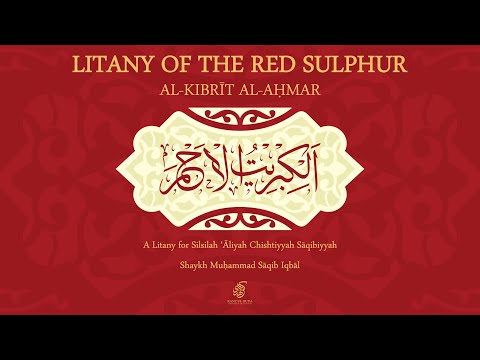
Among the many salawāt and devotional litanies that the Muslim world has carried from century to century, Ṣalāt / Durūd al‑Kibrīt al‑Aḥmar —often rendered in English as “the Litany of Red Sulphur”—holds a distinctive place, including in my homeland, Kashmir. In popular circulation it is most commonly ascribed to Shaykh ʿAbd al‑Qādir al‑Jīlānī (470–561 AH / 1077–1166 CE), the Baghdad‑based preacher, jurist, and Sufi master whom later tradition remembers as the founding figure of the Qādirī path.
The title itself is a clue to how this text has been *heard* by generations of reciters. “Red sulphur” (al‑kibrīt al‑aḥmar) belongs first to the language of alchemy: the red elixir was imagined as the agent that could transmute what is ordinary into something precious. Sufi writers then took that alchemical image and made it interior—speaking of “red sulphur” as a symbol of rare, transformative realization, or even as a name for the spiritually effective presence of a true guide. In that sense, the title reads like an intention statement: this is not merely a “nice formula,” but a ṣalāt meant to leave the heart different from how it began.
Formally, al‑Kibrīt al‑Aḥmar is not a poem like the Burdah; it is a majestic, extended ṣalāt—a flowing invocation that opens with the famous rise of praise: “Allāhumma ijʿal afḍala ṣalawātika…” and then unfolds as a vast garland of Prophetic epithets. It speaks in the devotional “cosmology” that salawāt literature knows well: the Prophet ﷺ as mercy, as guidance, as the one through whom meanings become visible; it moves through luminous names and titles, and it does not shy away from recounting the signs and miracles that the tradition associates with him—before concluding, as many such litanies do, with prayers upon his family and companions and with Qur’anic doxology.
Because it is so widely loved, the question of attribution deserves to be handled with both respect and accuracy. A great deal of modern devotional publishing (print and online) simply presents it as the prayer of al‑Jīlānī, and that “practical attribution” is now part of how many communities have received it. At the same time, some compendia that catalogue famous ṣalawāt record a more layered transmission history for the long formula beginning *“Allāhumma ijʿal afḍala ṣalawātika…”*: it is mentioned as being ascribed by some to al‑Ghazālī or to the Ghawth (al‑Jīlānī), while also being identified there as belonging to al‑Qutb ʿAbd Allāh al‑ʿAbdūsī, with the note that al‑Ghazālī transmitted it from him. A related discussion also appears in large anthology traditions preserved in digitized form, where this same opening is treated as a known, discussed formula rather than a single‑line certainty.
A digitized Dalāʾil al-khayrāt manuscript record (Deccan/India; dated late 12th AH / 18th c. CE) lists appended prayers and explicitly notes:
a “Durūd Ḥaḍrat Ghawth al-Aʿẓam (= ʿAbd al-Qādir al-Kīlānī)” with an incipit matching “اللهم اجعل أفضل صلواتك…”, and
separately, a “Durūd Kibrīt al-Aḥmar” whose incipit is given as “الحمد لله الذي أذهب عنا الحزن”.
That tells you two things: (i) these durūd texts were being copied in India by that period, and (ii) titles/incipits can be assigned differently across manuscripts and later prints.
What makes al‑Kibrīt al‑Aḥmar endure, in my view, is not only its reputation, but its *craft*. It is built to do something to the reciter: the sheer abundance of names is not decorative; it trains attention. Recited slowly, it becomes a guided act of witnessing—moving from tongue to meaning, from meaning to presence, from presence to love and love to devotional obedience. And the boldness of its imagery (so characteristic of later salawāt writing) is doing a serious job: it keeps insisting that praising the Prophet ﷺ is not an aesthetic hobby, but a way of remembering what matters most—mercy, guidance, gratitude, and the hope of nearness to God through sending blessings upon His beloved ﷺ.
In that sense, this ṣalāt is a “literature,” that is a lived practice: a text people keep close for days of heaviness and days of joy, for private wird and communal gatherings, for a faith that wants words big enough to carry longing. The title “Red Sulphur” fits: not because the prayer is secret, but because—when it is recited with adab and attention—it aims and achieves a kind of inward transmutation: from distraction toward remembrance, and from cold recitation toward warmth of love for the Prophet ﷺ, a heedless heart to a healed heart and aware and energized soul.
Below you will find an amazing recitation by Mawlana Sayyid Zayn Saqibi, although the way that he recites may slightly differ from how the text of the litany appears in the book. There is a note in the explanation:
He has intentionally included additional waqf (pauses), to enhance the beauty of the recitation and make it easier to follow. These adjustments are made with full adherence to the sciences of tajweed and qira'at and without altering or affecting the meaning of the words.
However, it is strongly recommended that the recitation be adhered to as presented in the book. For this reason, the text that appears on the screen is consistent with the text from the book and does not reflect the additional waqf(pauses) by Mawlana. :
بِسْمِ اللَّهِ الرَّحْمَٰنِ الرَّحِيمِ
In the Name of Allah—the All‑Merciful, the Always‑Merciful.
اللَّهُمَّ اجْعَلْ أَفْضَلَ صَلَوَاتِكَ أَبَدًا،
O Allah, send—forever—the very best of Your blessings,
وَأَنْمَى بَرَكَاتِكَ سَرْمَدًا،
and Your most ever‑increasing blessings, for all eternity,
وَأَزْكَى تَحِيَّاتِكَ فَضْلًا وَعَدَدًا،
and the purest of Your greetings of peace—surpassing in grace and in number—
عَلَى أَشْرَفِ الْخَلَائِقِ الْإِنْسَانِيَّةِ،
upon the noblest of human creation,
وَمَعْدِنِ الدَّقَائِقِ الْإِيمَانِيَّةِ،
and the fountainhead (literally : the most important mine) of faith’s finest subtleties,
وَطُورِ التَّجَلِّيَاتِ الْإِحْسَانِيَّةِ،
and the Mount (linking to the Mount of Musa AS, in the Sinai) of the manifestations of iḥsān (beautiful and perfect devotion),
وَمَهْبِطِ الْأَسْرَارِ الرَّحْمَانِيَّةِ،
and the locus of descent of the Merciful’s secrets,
وَعَرُوسِ الْمَمْلَكَةِ الرَّبَّانِيَّةِ،
and the crown (literally : radiant bride) of the Lordly Kingdom,
وَاسِطَةِ عِقْدِ النَّبِيِّينَ،
and the centerpiece (jewel) in the necklace of the prophets,
وَمُقَدِّمِ جَيْشِ الْمُرْسَلِينَ،
and the vanguard of the army of the messengers,
وَأَفْضَلِ الْخَلَائِقِ أَجْمَعِينَ،
and the most eminent of all created beings,
حَامِلِ لِوَاءِ الْعِزِّ الْأَعْلَى،
the standard-bearer of the banner of the Highest Exaltation,
witness of the secrets of pre‑eternity (the beginningless divine timelessness), and beholder of the primordial radiances (the first sparks of light of the earliest creation)
وَتَرْجُمَانِ لِسَانِ الْقِدَمِ،
and the articulator (of the hidden meanings) of the pre-eternal tongue (timeless word),
وَمَنْبَعِ الْعِلْمِ وَالْحِلْمِ وَالْحُكْمِ،
and the source wellspring of knowledge, forbearance, and wisdom,
who actualized the secrets of the stations of divine choosing,
سَيِّدِ الْأَشْرَافِ وَجَامِعِ الْأَوْصَافِ،
The master of the noble ones, in whom all perfections (virtues) are brought together.
الْخَلِيلِ الْأَعْظَمِ،
the supreme, intimate beloved (of God) (literally: khalil is the one whose love has entered and filled the chest cavity and hence heart completely, leaving no space for anything else.)
the one (divinely strengthened or) supported by the most decisive proofs and signs/evidential marks pointing to truth.
الْمَنْصُورِ بِالرُّعْبِ وَالْمُعْجِزَاتِ،
the one divinely aided to triumph through awe and incapacitating miracles
الْجَوْهَرِ الشَّرِيفِ الْأَبَدِيِّ،
the noble essential reality, everlasting,
وَالنُّورِ الْقَدِيمِ السَّرْمَدِيِّ،
and the primordial (spiritual) light that endures in perpetual continuity.
سَيِّدِنَا وَنَبِيِّنَا مُحَمَّدٍ،
our master and our Prophet, Muhammad,
الْمَحْمُودِ فِي الْإِيجَادِ وَالْوُجُودِ،
the praiseworthy in origination and in existence.
الْفَاتِحِ لِكُلِّ شَاهِدٍ وَمَشْهُودٍ،
the one who opens the way for every witness and every witnessed reality.
حَضْرَةِ الْمُشَاهَدَةِ وَالشُّهُودِ،
the august presence of spiritual witnessing and conscious awareness.
نُورِ كُلِّ شَيْءٍ وَهُدَاهُ،
the light of all existence (literally: every thing) and its guidance.
سِرِّ كُلِّ سِرٍّ وَسَنَاهُ،
the secret essence of every secret and its shining splendor.
الَّذِي انْشَقَّتْ مِنْهُ الْأَسْرَارُ،
the one from whom the mysteries burst forth
وَانْفَلَقَتْ مِنْهُ الْأَنْوَارُ،
and from him the radiant lights break forth.
السِّرِّ الْبَاطِنِ، وَالنُّورِ الظَّاهِرِ،
The hidden secret and the manifest light.
السَّيِّدِ الْكَامِلِ،
the perfect master
الْفَاتِحِ الْخَاتِمِ،
the inaugurator and the final seal
الْأَوَّلِ الْآخِرِ،
the first and the ultimate
الْبَاطِنِ الظَّاهِرِ،
the hidden and the manifest
الْعَاقِبِ الْحَاشِرِ،
the final successor and the gatherer (of humankind on the Day of Judgment)
النَّاهِي الْآمِرِ،
the one who forbids evil and enjoins what is right
النَّاصِحِ النَّاصِرِ،
the sincere adviser and the one who always helps
الصَّابِرِ الشَّاكِرِ،
the steadfast and the grateful
الْقَانِتِ الذَّاكِرِ،
the devout worshipper and the one who constantly remembers (God)
الْمَاحِي الْمَاجِدِ،
the one who effaces or wipes away (in prophetic tradition, the one through whom disbelief is erased) and the magnanimous one (possessing exalted honor)
الْعَزِيزِ الْحَامِدِ،
the dignified (and honored) one and the one who praises God
الْمُؤْمِنِ الْعَابِدِ،
the one firm in faith and devoted in worship
الْمُتَوَكِّلِ الزَّاهِدِ،
the one of complete reliance on God, and the one detached from (all) worldly attachments
الْقَائِمِ الطَّائِعِ،
the devoted steadfast one and the obedient one
الشَّهِيدِ الْوَلِيِّ،
the witness and the intimate friend
الْحَمِيدِ الْبُرْهَانِ،
the praiseworthy one and the decisive proof
الْحُجَّةِ الْمُطَاعِ،
the conclusive evidence and the one obeyed
الْمُخْتَارِ الْخَاضِعِ،
the chosen one and the humble
الْخَاشِعِ الْبَرِّ الْمُسْتَنْصِرِ،
deeply reverent, righteous one reliant upon Divine Support
الْحَقِّ الْمُبِينِ،
the truth made manifest
طٰهٰ وَيٰسٓ،
Ṭā-Hā and Yā-Sīn
الْمُزَّمِّلِ الْمُدَّثِّرِ،
the one wrapped in garments and the one enveloped in a mantle
سَيِّدِ الْمُرْسَلِينَ،
the master of the Messengers
وَإِمَامِ الْمُتَّقِينَ،
the leader of the God-conscious
وَخَاتَمِ النَّبِيِّينَ،
the seal of the Prophets
وَحَبِيبِ رَبِّ الْعَالَمِينَ،
the beloved of the Lord of the Worlds
النَّبِيِّ الْمُصْطَفَى،
the Prophet specially chosen
وَالرَّسُولِ الْمُجْتَبَى،
the elect Messenger
الْحَكَمِ الْعَدْلِ،
the just judge
الْحَكِيمِ الْعَلِيمِ،
endowed with deep wisdom and knowledge
الْعَزِيزِ الرَّؤُفِ الرَّحِيمِ،
the noble, the tenderly compassionate, the always-merciful
Imām Sharaf al-Dīn Muḥammad ibn Saʿīd al-Būṣīrīwas a 7th/13th‑century Egyptian poet and Sufi, remembered above all for a single devotional masterpiece: al‑Burdah (“The Mantle Ode”). He lived and wrote in Mamluk Egypt, and later tradition strongly associates him with the Shādhilī spiritual lineage.
The poem’s full, formal title is al‑Kawākib al‑Durrīyah fī Madḥ Khayr al‑Barīyah (“The Celestial Lights in Praise of the Best of Creation”), but the Muslim world knows it simply as Qaṣīdat al‑Burda—a
name tied to a beloved narrative: al‑Būṣīrī, stricken with illness,
composes (or recites) his praise; the Prophet ﷺ appears to him in a
dream and covers him with a mantle; he wakes restored. Whether one reads
that account as literal miracle, hagiographic truth, or sacred
symbolism, it explains why the Burdah is not only “literature,” but also
a poem people live with—recited in hope, fear, love, and longing.
In Islamic tradition, the Burdah sits at the heart of madīḥ nabawī
(Prophetic praise poetry) and helped shape the soundscape of public
devotion—especially in gatherings where love for the Prophet ﷺ is
renewed through recitation and chant. It is famously present in Mawlid
settings and other communal occasions, where poetry is not a “side
dish,” but a liturgical language: teaching the sīrah, softening the
heart, and making reverence audible.
What
keeps the Burdah enduring, in my view, is that it does several jobs at
once without feeling stitched together: it begins with a refined
classical nasīb
(love‑prelude), turns into unsparing moral counsel against the ego,
rises into panoramic praise of the Prophet ﷺ, and ends as intimate
duʿā’—all while staying recognizably one voice: a believer trying to be
healed. That layered structure is also why it generated a huge afterlife
of teaching and interpretation: the Burdah became a text to be memorized, commented on, performed, and carried—a “living” devotional work rather than a poem that sits quietly on a shelf.
Close translation: All praise belongs to Allah, the One who brought creation into being from nonexistence; then blessings (prayers) upon the Chosen One—chosen in pre-eternity. Explanation / notes: al-ḥamd
(الحمد) is not just “thanks,” but praise that includes gratitude and
recognition of perfection—a Qur’anic opening key that sets the tone as
worship, not merely poetry. munshī (منشي) means the Originator /
Initiator / Bringer-forth—here stressing creation ex nihilo (from
nothingness), a classic Islamic theological emphasis on Allah’s absolute
creative power. ثم (then) signals a devotional order: praise of God
first, then ṣalāh upon the Prophet ﷺ—a common adab in sermons, books,
and liturgical poetry. al-mukhtār (المختار) is a reverent epithet for the Prophet ﷺ: “the Chosen.” fī
l-qidam (في القِدم) literally “in pre-eternity.” In careful reading, it
means: chosen in Allah’s pre-eternal knowledge and decree—not that the
Prophet is “pre-eternal” in the divine sense (only Allah is truly
Qadīm). It’s devotional shorthand for God’s timeless election and
honoring of him.
This an amazing rendering done in different maqams by Awakening Records :
This is another rendering, more sober, done during devotional mawlid celebrations in Indonesia. It is in the style of the Habaib (descendants of the Prophet ﷺ) from Hadramaut:
Here is a rendering, a bit raw, often found in the milad celebrations in South Asian gatherings:
Close translation: My Lord, send blessings and grant peace—always, forever— upon Your Beloved, the best of all creation. Explanation / notes: Mawlāya (مولاي): “My Master / My Lord,” a direct address to Allah, carrying intimacy and humility. ṣalli wa sallim (صلِّ وسلِّم) combines two devotional requests: ṣalli: “send ṣalāh” (divine blessing, honoring, raising in rank) sallim: “grant salām” (peace, safety, well-being) This
pairing mirrors widely used Muslim devotional formulas and echoes the
Qur’anic imperative to send blessings upon the Prophet (Q 33:56) in
meaning and spirit. dā’iman abadan (دائمًا أبدًا) intensifies the
request: not occasional praise, but unceasing remembrance—a hallmark of
liturgical refrains meant for repeated communal recitation. ḥabībika
(حبيبك): “Your Beloved”—a central term in Prophetic devotion, expressing
love while still keeping the relationship properly theological: the
Prophet is beloved to Allah, not divine. khayr al-khalq (خير الخلق):
“the best of creation.” In devotional literature it functions as a
concise summary of Prophetic excellence—character, mercy,
guidance—without implying divinity.
Close translation: Is it from remembering loved neighbors at Dhī Salam that you’ve mixed tears flowing from your eye with blood? Explanation / notes: The
poem opens in the classical nasīb (love-prelude): intense longing is
pictured through the bold hyperbole “tears mixed with blood,” meaning
grief so sharp it feels bodily.In
the nasīb (love‑prelude), naming the “coordinates of longing” is a way
of making emotion feel geographically anchored: the poet cries “from
remembering loved ones at Dhī Salam”—i.e., from remembering the place
where they once were . Dhī / ذو، ذي literally means “the one possessing / characterized by …” (a very common toponymic pattern in Arabia: Dhū…). al‑Salam / السَّلَم (or al‑Salām / السَّلام in some lexica) can denote a kind of tree—so the place‑name can be heard as “the place marked by salam‑trees.” A
common Burda commentary gloss says “Dhū Salam: a mountain of Ṭayy east
of Madīnah,” or that it is not a mountain but “a place between Makkah
and Madīnah near (Jabal) Qudayr.” So, in short: a Hijāz/Northern
Arabian toponym, remembered as either a jabal (mountain) or a
manzil/mawḍiʿ (stopping‑place) on the Makkah–Madīnah corridor in the
poetic imagination.
Close translation: Or did the wind blow from the direction of Kāẓimah, and lightning flash in the darkness from Iḍam? Explanation / notes: Wind and lightning are classic triggers of memory in Arabic poetry. Lexically كَاظِمَة elates to كظم
(kaẓm), “to restrain / hold in” (the same root as kāẓim—one who
suppresses anger). A source that quotes Yāqūt describes Kāẓimah as a
jaww (open lowland) on the seashore on the route from Baṣrah toward
Baḥrayn, about two “stages” (marḥalatayn) from Baṣrah, with many
wells—widely mentioned by poets. Some Burda glosses simply say
“Kāẓimah: a place at/near Madīnah”. “The wind blew from the direction
of Kāẓimah” means: a wind carrying the “scent” of the beloved’s country.
The point is not meteorology; it’s how nature becomes a messenger.
al‑Bakrī (Muʿjam mā istaʿjam) is cited as saying that Iḍam: a wādī
“below/near Madīnah” (وادٍ دون المدينة),
and also that Iḍam is a mountain associated with tribes such as Ashjaʿ
and Juhaynah—with the “wadi” reading also reported. A Burda gloss
matches this double tradition: “Iḍam: a mountain; and it is said: a wadi
near Madīnah.” “Iḍam” occurs in sīrah/early reports as “Baṭn Iḍam”,
including an incident tied (in some narrations) to the Qur’anic warning
about killing someone who offers salām (Q 4:94). “Lightning flashed in
the darkness from Iḍam” is a classic image: the lover sees distant
lightning on a known horizon line, and that sight pulls the heart back
to where the beloved once camped.
Close translation: Why is it that when you tell your eyes “stop,” they still pour— and when you tell your heart “wake up,” it still wanders, bewildered? Explanation / notes:
Reason issues commands, but passion overrules them. The pairing of eyes
(tears) and heart (confusion) is a map of love-sickness.
Close translation: Does the lover think love can be kept hidden— between a streaming tear and a burning heart? Explanation / notes: Love cannot be concealed because its “witnesses” are visible: tears spill outside; the inner fire shows in one’s state.
Close translation: If not for passion, you would not weep over abandoned ruins, nor lose sleep remembering the bān-trees and the landmark. Explanation / notes:
“Ruins” and “trees” are stock images of the old campsite—symbols of
what has vanished. The point is: your tears and insomnia prove the love
is real.
Close translation: So how can you deny love, after tears and sickness—upright witnesses—have testified against you? Explanation / notes: A legal metaphor: tears and illness are described as trustworthy witnesses (عُدول) in court, condemning the claim “I’m not in love.”
Close translation: Longing has inscribed two lines upon your cheeks—tears and wasting— like yellow dye and red blossom upon the face. Explanation / notes: The
“two lines” are the marks of love: tear-tracks and emaciation/pallor.
The floral color imagery suggests streaks of yellow and red—physical
proof of inner ache.
Close translation: Yes—my beloved’s phantom came by night and kept me awake; love interrupts pleasures with pain. Explanation / notes: The “phantom” is the dream-vision of the beloved that both comforts and torments. Love is portrayed as inherently bittersweet.
Close translation: O you who blame me for chaste ʿUdhrī love—here is my excuse to you; if you were fair, you would not blame at all. Explanation / notes: “ʿUdhrī
love” evokes the ideal of pure, self-denying devotion. The poet gently
rebukes the blamer: true understanding would replace blame with
compassion.
Close translation: My condition has overtaken me: my secret is not hidden from tale-bearers, and my illness is not cut off—not cured. Explanation / notes: Love becomes public despite one’s efforts; gossipers notice. The “illness” is the classic metaphor for overpowering attachment.
Close translation: You offered me sincere advice, but I do not hear it— the lover is deaf to reproachers. Explanation / notes: When
love rules, even good counsel sounds distant. The line captures the
psychology of obsession: the heart filters out what threatens its
attachment.
Close translation: I suspected the counsel of gray hair when it reproached me— yet gray hair is the farthest from being accused when giving advice. Explanation / notes: Aging is a truthful messenger: it exposes life’s fragility. The poet admits he distrusted a warning that, by nature, is honest.
Close translation: For my soul that commands to evil would not take heed— in its ignorance—even from the warning of gray hair and old age. Explanation / notes: This echoes Qur’ānic language (النفس الأمّارة بالسوء). The poem now pivots from romantic prelude to moral self-scrutiny: desire resists even obvious warnings.
Close translation: Nor did it prepare, from good deeds, hospitality for a guest who has come upon my head with no shame. Explanation / notes: The
“guest” is old age (and the nearness of death) arriving abruptly. The
poet confesses he failed to “host” it with righteous preparations.
Close translation: Had I known I would not honor it, I would have concealed the secret it showed me—using katam-dye. Explanation / notes: A
witty cultural detail: katam is used to dye hair. He says: if I was
going to disrespect gray hair’s message, I might as well have hidden it
cosmetically.
Close translation: Who will help me rein in its runaway impulse and misguidance— as a horse’s bolting is reined in by a bridle? Explanation / notes: The
soul’s urges are like a horse that bolts. The spiritual task is taming,
not denying the animal exists—discipline through “reins.”
Close translation: Do not try to break its desire by means of sins— food only strengthens the appetite of the glutton. Explanation / notes: A sharp moral logic: indulging desire to “manage” desire only feeds it. Sin is like more food to an already ravenous appetite.
Close translation: The soul is like a child: if you neglect it, it grows up loving to suckle; but if you wean it, it will be weaned. Explanation / notes: Habits become nature. Train the soul early and consistently; otherwise it “matures” into addiction.
Close translation: Turn away its craving, and beware of giving it authority— for desire, once made governor, either strikes dead or brands with disgrace. Explanation / notes: The warning is about handing leadership to impulse. Unchecked desire ruins life—either by destruction or by humiliation.
Close translation: Shepherd it, even when it is weary within acts of obedience; and if it finds the pasture sweet, do not let it graze freely. Explanation / notes: Keep
guiding the soul: sometimes it feels tired of worship, yet it must
continue. And when it enjoys “easy pastures” (comforts), that is exactly
when restraint is needed.
Close translation: How many a pleasure has it made beautiful—though deadly— from where he never realized the poison lay in the fat. Explanation / notes: Temptation often comes wrapped in comfort. The “fat” suggests something rich and attractive that conceals harm.
Close translation: Fear hidden traps in hunger and in fullness— for sometimes hunger is worse than indigestion. Explanation / notes: Not every “hardship” is virtuous, and not every “ease” is safe. The line argues for wise balance, not self-destruction.
Close translation: Drain tears from an eye that has been filled with forbidden sights, and keep to the strict diet of remorse. Explanation / notes: Repentance is pictured as cleansing: eyes that “consumed” the unlawful now “pour out” tears. “Diet” (حِمية) implies disciplined remorse that changes behavior.
Close translation: Oppose the soul and Satan, and disobey them— even if they offer you “pure advice,” suspect it. Explanation / notes: They
may disguise temptation as “reasonable counsel.” The spiritual stance
is vigilance: not every inner suggestion deserves trust.
Close translation: Do not obey them as either opponent or judge— for you know the plotting of an opponent, and the bias of a judge. Explanation / notes: The
metaphor is courtroom logic: the soul and Satan are not neutral. Don’t
let them prosecute you or rule over you—return judgment to revelation,
conscience, and sober reason.
Close translation: I seek God’s forgiveness for speech without action— I have attributed offspring to one who is barren. Explanation / notes: Words
without deeds are sterile. Claiming them as “fruit” is like claiming
children for someone incapable of having them—an image for hypocrisy and
empty preaching.
Close translation: I commanded you to good, yet I did not follow it; I did not walk straight—so what right have I to tell you: “Be upright”? Explanation / notes: A
fierce self-indictment: the poet refuses moral superiority. In Islamic
ethics, this is a moment of humility—reform begins with oneself.
Close translation: I took no extra provisions before death—no voluntary deeds; I prayed only the obligatory, and I did not fast. Explanation / notes: “Provision”
evokes the Qur’ānic travel-image: life is a journey and deeds are
supplies. He regrets neglecting nawāfil (extra worship) beyond the
minimum.
Close translation: I wronged the Sunnah of the one who enlivened the night in worship until his feet suffered pain from swelling. Explanation / notes: He contrasts his laziness with the Prophet’s devotion in night prayer. The image recalls reports of the Prophet ﷺ standing long in worship out of gratitude.
Close translation: And from hunger he tightened his belly, and he folded beneath stones a waist once softened by comfort. Explanation / notes: This alludes to reports of the Prophet ﷺ
enduring hunger—binding stones to his stomach. The moral weight is
clear: true leadership is built on patience, simplicity, and compassion
for the poor.
Close translation: The towering mountains tempted him with gold, offering themselves to him— but he showed them disdain, no matter how lofty they stood. Explanation / notes: This is an image for immense wealth (as if “mountains of gold”). The Prophet ﷺ is portrayed as refusing worldly lure with calm dignity.
Close translation: Even need itself confirmed his renunciation of it— for necessity does not overstep the boundaries of the safeguarded. Explanation / notes: A
subtle point: even when there is genuine need, his taking would be only
within what is permitted and fitting, never sliding into greed or moral
compromise.
Close translation: And how could the need of one—through whom the world was brought forth from nonexistence— ever call him toward worldliness? Explanation / notes: Devotional language intensifies here: the poet presents Muhammad ﷺ as the supreme reason creation is meaningful. The point is moral: someone of that rank is not “pulled” by dunya.
Close translation: Muhammad is the master of the two worlds and the two weighty kinds (humankind and jinn), and of both peoples—Arab and non-Arab. Explanation / notes: A universal claim: his message and leadership are not ethnic, regional, or temporary—they address all creation.
Close translation: Our Prophet is the one who commands and forbids—no one is more true in saying “no,” nor more true in saying “yes,” than he. Explanation / notes: I
like how the line praises something simple but rare: moral clarity and
trustworthiness—his “yes” is mercy, his “no” is protection.
Close translation: He is the Beloved whose intercession is hoped for against every terror from the overwhelming horrors. Explanation / notes: This gestures to shafāʿah (intercession) in Islamic belief: on the hardest Day, hearts cling to mercy through God’s permission.
Close translation: He called to God—so those who hold fast to him hold fast to a rope that does not break. Explanation / notes: To follow the Prophet ﷺ is framed as gripping a secure lifeline—guidance that won’t snap when tested.
Close translation: He surpassed the prophets in form and in character; none came near him in knowledge or generosity. Explanation / notes: This
is high devotional praise (with deliberate intensity). The emphasis is:
beauty + ethics + wisdom + giving meet together in him.
Close translation: And all of them, from the Messenger of God, seek a scoop from the sea—or a sip from the rainclouds. Explanation / notes: The Prophet ﷺ is
pictured as an ocean/rain-source of guidance, while other prophets draw
from that same divine generosity—an image beloved in later spiritual
readings.
Close translation: They stand before him at the limit of their measure— at a mere point of knowledge, or a single stroke of wisdom. Explanation / notes: The rhetoric pushes one idea: compared to his comprehensive rank, others have measured shares—real, honored, yet limited.
Close translation: He is the one whose inward meaning and outward form were perfected— then the Creator of souls chose him as the Beloved. Explanation / notes: The
poet joins inner completion (meaning) with outer completion (form).
It’s a claim that his wholeness is not cosmetic; it is ethical and
spiritual.
Close translation: He is exalted above having any equal in his virtues— the essence of beauty in him is not divided. Explanation / notes: “Undivided beauty” suggests a rare harmony: not one virtue here and another there, but a complete blend.
Close translation: Leave what the Christians claimed regarding their prophet— and then praise him as you wish, and let him be your standard. Explanation / notes: This
draws a boundary: in Islam, prophets are honored without divinizing
them. Within that boundary, the poet says: praise the Prophet ﷺ boldly.
Close translation: Ascribe to his person whatever nobility you wish, and ascribe to his rank whatever greatness you wish. Explanation / notes: Not “make him divine,” but: do not be stingy in recognizing his honor, mission, and stature.
Close translation: For the merit of God’s Messengerﷺ has no limit that any speaker could fully express. Explanation / notes: A classic devotional move: the Prophet’s virtues exceed language. Praise is always true yet still incomplete.
Close translation: If his signs matched his rank in magnitude, his name—when called—would revive decayed bones. Explanation / notes: Not
a literal claim to be tested like physics—rather: his rank is so vast
that even astounding miracles would still feel “small” next to it.
Close translation: He did not test us with what minds would collapse under, out of care for us—so we neither doubt nor drift. Explanation / notes: This highlights mercy in the message: guidance is meant to be livable and clear, not an impossible riddle.
Close translation: Creation is worn out trying to grasp his true reality; whether near or far, nothing is seen of him except one not fully encompassed. Explanation / notes: The Prophet ﷺ is knowable in his Sunnah and life—yet his full spiritual rank is beyond complete human measurement.
Close translation: Like the sun: from afar it appears small to the eyes, yet it tires the gaze with exhaustion. Explanation / notes: The
closer you “look,” the more you realize your limits. It’s a strong
metaphor for spiritual perception: distance breeds simplification.
Close translation: And how could people asleep in this world grasp his reality— people distracting themselves with their reveries? Explanation / notes: Heedlessness is “sleep.” The poet is saying: you cannot recognize luminous truth while living in distraction.
Close translation: The furthest reach of knowledge about him is: he is human— and he is the best of all God’s creation. Explanation / notes: This is one of the poem’s most important balances: fully human (not divine), yet the best of humanity.
Close translation: Every sign the noble messengers brought— it only reached them through a connection to his light. Explanation / notes: This
reflects a devotional doctrine of the “Muhammadan light” in later
tradition: all prophetic guidance shares a single divine source, with
Muhammad ﷺ as its fullest manifestation.
Close translation: He is the sun of grace; they are its stars— displaying its lights to people in darkness. Explanation / notes: A beautiful hierarchy without insult: earlier prophets are honored “stars,” but he is the “sun” that completes illumination.
Close translation: How noble the natural form of a Prophet whose character adorned him— clothed in beauty and marked by brightness of face. Explanation / notes: Not just “handsome,” but radiant in demeanor—his ethics shine outward.
Close translation: Like flowers in elegance, like the full moon in honor, like the sea in generosity, like time itself in resolve. Explanation / notes: Not just “handsome,” but radiant in demeanor—his ethics shine outward.
Close translation: Though he is one man, from his majesty it is as if—when you meet him— he stands amid an army and an honorable entourage. Explanation / notes: This describes presence: a single person whose dignity fills the space as if many stood with him.
Close translation: As though he were a hidden pearl within its shell, drawn from two mines: his speech and his smile. Explanation / notes: What people receive from him is precious in two ways: truthful words and mercy in expression.
Close translation: No fragrance equals the soil that holds his blessed bones— glad tidings to one who inhales it and finds healing. Explanation / notes: A
devotional reference to the blessedness of his resting-place (Madīnah).
“Healing” can be spiritual (hope, softness of heart) and, in popular
piety, also physical.
Close translation: His birth revealed the purity of his origin— how fragrant a beginning from him, and the culmination. Explanation / notes: He is praised from first moment to last: pure origin, pure life, pure legacy.
Close translation: A day when the Persians perceived that they had been warned of approaching hardship and retribution. Explanation / notes: This
begins the section of signs surrounding the Prophet’s birth—cosmic and
political symbolism: old empires sensing a coming shift.
Close translation: And the palace of Kisrā spent the night cracked apart— like the shattered unity of Kisrā’s people, never to be mended. Explanation / notes: A
birth-sign: the poet links a physical rupture (the Persian imperial
palace) to a coming moral–political rupture in the old order.
Close translation: And the fire’s breaths were extinguished, as if in grief for it— while the river stood dazed-eyed from sorrow. Explanation / notes: The
imagery is mythic and symbolic: elements of the world “react” to the
Prophet’s coming—fire dying down, water stunned—hinting at a turning of
eras.
Close translation: And Sāwah was distressed that its lake dried up— and the one who came to draw from it was turned back in rage when thirsty. Explanation / notes: Another
“sign”: a famous lake associated with the region is pictured as
drying—nature itself announcing change and unsettling the old religious
landscape. Sāwah here is the well-known city ساوه (Sāveh/Saveh) in
Persia (Iran). Classical geographers place it in the region of al‑Jibāl,
between al‑Rayy (near today’s Tehran) and Hamadhān (Hamadan). In the
mawlid/sīrah commentary tradition, “Lake Sāwah” is described as a large
lake in Persian lands, and Zarkānī (quoting earlier authorities) says it
was between Hamadhān and Qumm, so large that boats would travel on it,
and he even reports measurements like “more than six farsakhs” in length
and width. Liturgically and poetically, these images announce: the old
order is trembling; tawḥīd is arriving; the world is being
“re-set.” Hadith-critically, many scholars say the specific reports
about these portents are not established with sound chains (they
circulate widely in sīrah and mawlid material, but with weakness).
Close translation: It was as though the fire had what water has—dampness— from grief; and as though water had what fire has—flame. Explanation / notes: A
striking reversal: boundaries between opposites blur. The point is not
physics—it’s poetic shock, saying: the cosmos feels the moment.
Close translation: The jinn cried out, lights blazed forth, and Truth began to appear—through meaning and through word. Explanation / notes: This
moves from “omens” to “message”: light and truth are rising. “Meaning
and word” gestures toward revelation: clarity arriving in both sense and
speech.
Close translation: They went blind and deaf: the proclamation of glad tidings was not heard, and the flash of warning was not even sensed. Explanation / notes: A moral diagnosis: the real barrier is not lack of signs, but inner refusal—spiritual “blindness” and “deafness.”
Close translation: After their soothsayer informed the peoples that their crooked religion would not endure—would not stand upright. Explanation / notes: The
poet points to even pre-Islamic “seers” sensing collapse in the
dominant religious order—an argument that the shift was visible to
anyone with insight.
Close translation: And after they witnessed in the horizon shooting stars plunging down—matching the idols that were on earth. Explanation / notes: This
echoes the Qur’ānic/hadith theme of meteors driving back devils
eavesdropping on heaven—paired here with idols on earth: deception is
being hunted down on both levels.
Close translation: Until those devils fled from the path of revelation— one defeated fugitive following another. Explanation / notes: A vivid picture of the “closing” of routes of false access to the unseen—revelation is protected; distortion is pushed back.
Close translation: As though, in their flight, they were the champions of Abraha— or an army pelted with pebbles thrown from his two palms. Explanation / notes: Two
allusions: the defeat of Abraha’s army (Year of the Elephant), and the
Prophetic sign where pebbles/dust are cast against an enemy. The poet
uses both to say: opposition collapses when God supports His Messenger.
Close translation: He cast them after they had glorified (God) within his palms— like the casting out of a glorifier from the belly of a devourer. Explanation / notes: The
pebbles are imagined praising God in his hands, then being flung. The
simile recalls Jonah being cast from the fish—an image of release,
rescue, and divine power.
Close translation: Trees came, prostrating to his call— walking toward him on a “leg” with no foot. Explanation / notes: A
miracle-image: nature obeys him by God’s permission. The “leg with no
foot” is playful precision—trees don’t have feet, yet they “move.”
Close translation: As though they traced lines for what they wrote— their branches forming wondrous script upon the ground. Explanation / notes: The
movement of branches becomes “calligraphy.” It’s also a nod to an
Islamic sensibility: creation “writes” signs for those who read with the
heart.
Close translation: Like a cloud—wherever he traveled, it traveled too— shielding him from the scorching blaze of midday heat. Explanation / notes: A well-known devotional motif: providential shade accompanies him. The point is care and honor, not weather reporting.
Close translation: I swear by the split moon: it has, from his heart, a bond that makes this oath rightly fulfilled. Explanation / notes: The
“split moon” refers to the famous sign. The poet links the miracle to
the Prophet’s inner truth—his heart is portrayed as a source of luminous
certainty.
Close translation: And what the cave contained—of goodness and generosity! Yet every eye of the disbelievers was blinded to him. Explanation / notes: This refers to the Hijrah episode (the cave): protection can be right in front of pursuers, yet God veils their perception.
Close translation: Truth was in the cave—and the Truthful One (Abū Bakr) did not depart; while they said: “There’s no one at all in the cave.” Explanation / notes: A
beautiful wordplay: ṣidq (truth) and al-Ṣiddīq (the steadfastly
truthful companion). Reality is present, but denial speaks loudly.
Close translation: They assumed the dove—and assumed the spider— had neither woven nor nested over the best of creation. Explanation / notes: The
cave imagery continues: the web and birds are tiny means by which God
blocks a massive threat—small things can carry big protection.
Close translation: God’s protection made him independent of double armor, and of lofty fortresses. Explanation / notes: The
poet’s point is blunt: safety ultimately comes from God—material
defenses matter, but they are not the deepest source of security.
Close translation: Time never wronged me while I sought refuge through him, except that I gained a protection from him that was never violated. Explanation / notes: This
is the poet speaking personally now: invoking the Prophet’s rank with
God as a means of hope—especially when life feels oppressive.
Close translation: I never sought the richness of both abodes from his hand except that I received generosity—from the best one to receive from. Explanation / notes: “Both abodes” means الدنيا والآخرة
(this life and the next). The poet’s “opinion” is clear: turning toward
the Prophet’s guidance makes a person inwardly and outwardly richer.
Close translation: Do not deny revelation coming through his dreams—he has a heart that does not sleep when the eyes sleep. Explanation / notes: This
directly echoes the Prophetic saying: “My eyes sleep, but my heart does
not.” Dreams for him are not ordinary ((الخيال المتصل) = the
imagination “connected to” the dreamer); they are truthful revelation.
Close translation: And that was at a stage of his prophethood— so it is not to be dismissed like the state of one merely dreaming. Explanation / notes: The
poet argues: once prophethood is established, his visions carry weight.
He contrasts them with ordinary dream-states that have no authority
(Important to note the بدء الوحی).
Close translation: Blessed is God: revelation is not something acquired (learned), and no prophet is to be accused regarding the unseen. Explanation / notes: A core Islamic point: revelation is a gift from God, not a human “skill,” and prophets are trustworthy conveyors.
Close translation: How many sick people his palm healed by touch— and how many sound minds it freed from the tether of affliction! Explanation / notes: The poet gestures to healing miracles: physical illness and “لَمَم” (a troubling affliction—often taken as fits/possession-like harm). The focus is mercy expressed through cure.
Close translation: His supplication revived the pale, drought-year, until it resembled a bright forelock amid dark ages. Explanation / notes: Drought
is “gray,” life drained of color. His prayer returns rain—turning
bleakness into brightness. The “forelock” image suggests sudden beauty
on an otherwise dark face.
Close translation: With a passing cloud that poured—so that you’d think the valleys were a gift from the sea, or a torrent like the flood of al-ʿArim. Explanation / notes: He intensifies the rain scene: not a drizzle, but a sweeping overflow—comparing it to سَيْلَ الْعَرِم
(“the Flood of al‑ʿArim”) that was sent upon the people of Sabaʾ
(Sheba) after they turned away—an overwhelming flood that destroyed
their prosperity (Q 34:16). The intent is awe at God’s response to the
Prophet’s دعاء, invoking a benchmark: the archetypal, legendary flood known from Qur’anic narrative and Arab historical imagination.
Close translation: Leave me to describe signs that appeared for him— as clearly as a hospitality-fire seen at night on a hilltop. Explanation / notes: He’s
saying: these miracles are not subtle; they are as visible as a
hospitality-fire used to guide travelers at night—an old Arab symbol of
generosity and guidance.
Close translation: Pearls become more beautiful when strung in order— yet they do not lose their worth when unstrung. Explanation / notes: A
smart defense of poetic praise: arranging miracles into verses adds
beauty, but the miracles’ value does not depend on the poem.
Close translation: So how could the hopes of praise ever reach the generosity of his character and traits? Explanation / notes: Praise
always falls short. And honestly, this line feels true even as plain
ethics: the more you study his conduct, the harder it is to summarize it
with slogans.
Close translation: Verses of Truth from the All-Merciful—newly sent down, yet eternal as an attribute of the One described as Eternal. Explanation / notes: This
is theological poetry about the Qur’an: its recitation appears in time
to us (“revealed”), while its divine source and attribute are beyond
time. He’s praising the Qur’an without reducing it to “mere human
speech.”
Close translation: It is not bound to time, though it tells us of the Return (Resurrection), and of ʿĀd, and of Iram. Explanation / notes: The
Qur’an speaks across time: future (Judgment) and deep past (ancient
peoples). The poet’s point: it’s not a local document tied to one
moment.
Close translation: It remained with us, and so it surpassed every miracle of the prophets— for those miracles came, but did not remain. Explanation / notes: The
Qur’an is a living, ongoing miracle—recited, memorized, argued with,
returned to—rather than a one-time event witnessed by a single
generation.
Close translation: Decisive, perfectly judged—leaving no doubts for the quarrelsome, needing no external judge. Explanation / notes: He
praises Qur’ānic clarity: when approached sincerely, it resolves the
core questions—especially the ones people use mainly for argument.
Close translation: It has never been fought against, except that the fiercest enemy returned from the fight throwing down his weapons in surrender. Explanation / notes: The
poet gestures to a repeated pattern: hostility to the Qur’an collapses
when someone actually listens with honesty—many opponents eventually
become defenders.
Close translation: Its eloquence repelled the claim of its challenger— like a protective guardian repels a criminal’s hand from the sacred sanctuary. Explanation / notes: A
fierce simile: attempts to “match” the Qur’an are treated like an
assault on what is inviolable—repelled immediately by its unmatched بلاغة.
Close translation: It has meanings like the sea’s waves in endless reach— and beyond its very depths in beauty and worth. Explanation / notes: He’s
saying: you can keep returning and still not exhaust it—layer after
layer of guidance, language, law, story, and spiritual insight.
Close translation: Its wonders cannot be counted or enumerated, and repetition never bargains it down into boredom. Explanation / notes: A
lived reality for many reciters: the text stays fresh—sometimes the
same verse lands differently depending on the season of your life.
Close translation: The reciter’s eye finds coolness in it—so I said to him: You have grasped the Rope of God, so hold fast! Explanation / notes: “Coolness
of the eye” means deep relief and joy. “Rope of God” echoes Qur’ānic
language: cling to it for stability when everything else shakes.
Close translation: If you recite it in fear of the heat of Hell’s blaze, you extinguish that blaze with the cool draught of its “watering.” Explanation / notes: A
powerful close to this section: Qur’an as water that cools
fire—recitation not as decoration, but as rescue, repentance, and inner
purification.
Close translation: It is as though it were t al-Ḥawḍ: faces are made radiant by it— even for sinners who come to it blackened like cinders. Explanation / notes: He continues speaking about the Qur’an: it cleanses and dignifies, even those weighed down by sin, if they come sincerely.
Close translation: And (it is) like the Bridge (al-Ṣirāṭ) and like the Balance—perfectly just; without it, justice among people would never stand. Explanation / notes: The Qur’an is described as the ultimate moral measure: it sets right conduct and fair judgment in society.
Close translation: Do not be surprised at an envier who goes on denying it— pretending ignorance, though he is keen-eyed and understanding. Explanation / notes: Denial is not always intellectual; sometimes it’s moral—envy and pride can make a person “unsee” what they actually recognize.
Close translation: The eye may deny the sun’s light because of inflammation, and the mouth may deny water’s taste because of sickness. Explanation / notes: If
someone rejects clear truth, the problem may be the “organ” of
reception—heart, ego, or desire—not the clarity of the truth itself.
Close translation: O best of those whose court the seekers of pardon aim for— on foot, and atop lean, travel-worn camels. Explanation / notes: A
picture of people crossing distance for mercy—spiritually (through
prayer and devotion) and also physically (the old imagery of journeying
to the Prophet ﷺ).
Close translation: And who is the greatest sign for one who takes heed— and the greatest blessing for one who would seize the chance? Explanation / notes: He frames the Prophet ﷺ as both evidence (آية) and mercy (نعمة): a living proof that guidance is possible.
Close translation: You journeyed by night from one Sanctuary to another, as the full moon journeys through a dark night. Explanation / notes: This
begins the praise of al-Isrāʾ: from the Sacred Mosque in Makkah to the
far sanctuary in Jerusalem—an event cast in luminous imagery.
Close translation: And you kept ascending until you reached a station of “two bow-lengths”—a nearness none attained, none even dared to seek. Explanation / notes: This evokes the Qur’ānic phrase (53:9) used in accounts of the Miʿrāj: an unmatched closeness granted by God.
Close translation: And there the prophets and messengers placed you forward— the way attendants place forward the one they serve. Explanation / notes: This alludes to the tradition of the Prophet ﷺ leading the other prophets in prayer—symbolizing his final, unifying leadership.
Close translation: And you passed through the seven layered heavens with them, in a procession in which you were the bearer of the standard. Explanation / notes: The Miʿrāj is painted as a royal ascent: he is not merely present—he is the guide and leader.
Close translation: Until you left no course for any racer in nearness, and no climb for any climber seeking ascent. Explanation / notes: A poetic way of saying: his rank in closeness and honor surpassed all comparison.
Close translation: You made every station seem low by comparison when you were called to be raised— unique, like a singular proper name. Explanation / notes: A clever grammatical metaphor: a proper name stands alone—so too his singular distinction.
Close translation: So that you might win communion with what is hidden from eyes, and with every secret kept concealed. Explanation / notes: He gestures to realities beyond human sight—intimate knowledge and divine gifts not accessible by ordinary means.
Close translation: So you attained every glory without sharing, and passed every station with no rival crowding you. Explanation / notes: This is devotional hyperbole with a clear aim: to assert the Prophet’s unmatched standing.
Close translation: Vast is the measure of the ranks entrusted to you, and hard to grasp are the blessings granted you. Explanation / notes: Even describing his gifts feels inadequate—the poet admits the limits of language and understanding.
Close translation: Glad tidings for us, people of Islam: we have, by divine care, a pillar that will never collapse. Explanation / notes: A communal sigh of relief: the Prophet’s message is a lasting support.
Close translation: When God called our caller to obedience through the noblest of messengers, we became the noblest of nations. Explanation / notes: The Ummah’s honor is tied to response: dignity comes from answering God’s call through His Messenger.
Close translation: The news of his mission terrified the enemies’ hearts, like a sudden cry that startles heedless sheep. Explanation / notes: The poet emphasizes how quickly the message disrupted the old powers—fear is the reflex of threatened injustice.
Close translation: He kept meeting them in every battlefield until they were cut by spears, like meat laid on a butcher’s board. Explanation / notes: A
hard martial image: it’s not meant as gore for its own sake, but as a
declaration that persecution did not go unanswered forever.
Close translation: They wished to flee—almost envying, in that escape, the torn limbs carried off by eagles and vultures. Explanation / notes: The
poet pushes the terror to an extreme: their fear becomes so great that
even death seems “easier” than facing that steadfast force.
Close translation: Nights would pass and they would not even know their number— unless those nights belonged to the sacred months. Explanation / notes: In
constant anxiety, time blurs. Only the “protected” seasons (the sacred
months) register as distinct because they bring restraint.
Close translation: As though the religion were a guest who camped in their courtyard— with every noble champion, ravenous for the flesh of foes. Explanation / notes: There’s wordplay in قَرْم / قَرِم: “a great champion” and “hungry/eager.” Islam arrives as an honored “guest,” carried by fierce resolve.
Close translation: Dragging a “sea” of an army on swift mounts, hurling waves of heroes crashing one upon another. Explanation / notes:بَحْر خميس is an old idiom for a vast, well-ordered army. He turns the battlefield into ocean imagery—organized power in motion.
Close translation: From every volunteer for God, seeking reward, striking with something that uproots disbelief—cutting it down. Explanation / notes: A spiritual framing of struggle: not chaos, but disciplined sacrifice with accountability “to God,” not to ego.
Close translation: Until the faith of Islam, through them, became like rejoined kinship after estrangement. Explanation / notes: He emphasizes restoration: Islam gathers scattered people into bonds of responsibility and belonging.
Close translation: Always cared for by them as by the best father and the best husband— so she was neither orphaned nor widowed. Explanation / notes: Islam is personified as a protected woman: the Prophet ﷺ and his companions guard her continuity—teaching, living, and transmitting her.
Close translation: They are mountains—ask whoever collided with them what he saw of them in every clash. Explanation / notes: A portrait of the companions’ steadiness: they are not easily shaken, pressured, or bought.
Close translation: Ask Ḥunayn, ask Badr, ask Uḥud— seasons of death for them more dreadful than the plague. Explanation / notes: He
calls major battles as “witnesses.” The phrase means: what they faced
(and inflicted) was more decisive than any ordinary sickness.
Close translation: Those who sent white blades back red, after meeting every dark-massed foe from the enemy throngs. Explanation / notes: White
swords returning red is a classic battle image: the poet is praising
courage while also insisting the struggle was real, not theoretical.
Close translation: Like scribes with brown (wielded) spears for pens Leaving no letter of a body without dots Explanation / notes: A military metaphor: spear-thrusts become ink-dots on the “letters” of bodies—meaning they left no enemy unmarked in defeat.
Close translation: Weapon-borne—this is their distinguishing mark; as the rose is distinguished by its mark from the (plain) salam-tree. Explanation / notes: Their
“sign” is readiness and discipline. He contrasts
beauty-with-distinction (the rose) with something more ordinary—virtue
shows.
Close translation: The winds of victory deliver to you their fragrance— so you’d think every blossom still in its bud is an armored warrior. Explanation / notes: Victory
has a “scent,” and their coming feels like spring. It’s martial praise
softened by floral imagery—strength that also brings renewal.
Close translation: As though, upon the horses’ backs, they were high-ground growth— from the strength of their resolve (ḥazm), not from the tightness of girths (ḥuzum). Explanation / notes: A neat pun: they seem fused to their mounts not because of straps, but because of inner firmness and control.
Close translation: The enemies’ hearts flew off in fear of their might— so you could no longer tell the meek from the bold. Explanation / notes: Terror
flattens differences: under pressure, even the “tough” look like the
timid. The line plays on near-identical words to sharpen the point.
Close translation: Whoever is supported through the Messenger of God— even if lions in their own thickets, they fall silent and subdued Explanation / notes: This is not about swagger; it’s about a kind of courage that comes from certainty and purpose—fear is no longer the ruler.
Close translation: You will not see any ally except victorious through him, nor any enemy except broken. Explanation / notes: A
sweeping claim of moral history: alignment with Prophetic guidance
leads to strength; opposition collapses—if not immediately, then in
outcome.
Close translation: He settled his community in the fortress of his faith— like a lion dwelling with its cubs in a thicket. Explanation / notes: Islam is pictured as a protective stronghold, not a burden. The Prophet ﷺ is the guardian who keeps the community safe through law and mercy.
Close translation: How many disputants God’s words have thrown down, and how many adversaries proof has defeated! Explanation / notes: He shifts from sword to argument: revelation and clear evidence also “conquer”—by exposing falsehood and steadying truth.
Close translation: The erudition of an unlettered one is a sufficient miracle amid an age of ignorance—and sophistication from the state of orphanhood. Explanation / notes: This
is one of the strongest ethical proofs: an unlettered orphan becomes
the teacher of a civilization—something bigger than personal genius.
Close translation: I served him with praise, seeking by it release— from the sins of a lifetime spent in poetry and patronage. Explanation / notes: Al-Būṣīrī
turns inward again: this ode is not just art; it’s repentance—making
praise a ladder back to God through love of His Messenger ﷺ.
Close translation: Since those two (poetry and “patronage”) hung on me what one fears the consequences of— as though I were a sacrificial lamb from the herds, led with a garland. Explanation / notes: He
admits he has been “marked” by pursuits that can carry heavy moral
consequences. The sacrificial image is sharp: it suggests he feels
exposed and accountable, not proudly decorated.
Close translation: What an abject loss is a soul in its trade— it neither bought religion with the world, nor even tried to! Explanation / notes: He
extends the commerce metaphor: the tragedy isn’t only a bad bargain;
it’s that he didn’t even step into the real trade of salvation.
Close translation: Whoever sells what is deferred (the Hereafter) for what is immediate (this world), his loss will become clear—whether in a sale or even in a “salam” bargain. Explanation / notes: Even
if a deal looks clever or “structured,” it’s still ruin if it trades
the lasting for the fleeting. The line is morally blunt, and I think
it’s meant to be.
Close translation: If I fall into sin, my covenant with the Prophet is not broken, nor is my rope to him severed. Explanation / notes: This is not a license to sin; it’s the language of stubborn hope: even when he falls, he clings to love, loyalty, and return.
Close translation: For I have a pledge from him, by my being named “Muhammad”— and he is the most faithful of creation to pledges. Explanation / notes: A tender, almost childlike plea: he leans on the barakah of sharing the Prophet’s name, and on the Prophet’s known وفاء (faithfulness).
Close translation: If, at my Return, he does not take my hand—by pure grace— then say: “O stumbling of the foot!” Explanation / notes: He
imagines the terror of standing alone on the Day of Judgment. The
“stumbling foot” is a painful self-diagnosis: my ruin would be my own
fault.
Close translation: Far be it from him to deprive the one who hopes in his noble gifts, or that a seeker of his protection should return dishonored. Explanation / notes: This is one of the poem’s warmest moments: he speaks of the Prophet ﷺ as incapable of humiliating a supplicant.
Close translation: Ever since I bound my thoughts to his praises, I have found him the best commitment for my deliverance. Explanation / notes: Praise
here is not performance—it’s reorientation: keeping the Prophet ﷺ in
mind becomes a path back to repentance and steadiness.
Close translation: Richness from him will not pass by a dust-poor hand; for rain makes flowers grow even on hilltops. Explanation / notes: A
lovely image: need is “dusty hands,” generosity is “rain.” It says:
don’t be ashamed to ask—mercy makes unlikely places bloom.
Close translation: I did not seek the worldly “flower” that Zuhayr’s hands plucked for praising هَرِمِ(Haram ibn Sinān). Explanation / notes: He contrasts his intention with old patron-poetry: not praise for payment, but praise for salvation and love.
Close translation: O noblest of messengers—who do I have to seek refuge in but you when the overwhelming calamity comes? Explanation / notes: The
“overwhelming calamity” points to the Day of Judgment. The tone is
intimate: a person clinging to the one he believes God has made a mercy.
Close translation: Messenger of God, your rank will not be too narrow for me, when the Generous (God) manifests the Name “Avenger.” Explanation / notes: Even
at the moment of divine justice, he hopes the Prophet’s مقام (standing)
remains wide enough to shelter him—this is fear and hope braided
together.
Close translation: For of your generosity is this world and its counterpart (the Hereafter), and of your knowledge is the knowledge of the Tablet and the Pen. Explanation / notes: This
is famous for its boldness. In sound Islamic reading, it is poetic
hyperbole: all giving and all knowledge are truly Allah’s; the Prophet ﷺ
is honored as the greatest means by which guidance and mercy reach
creation, and he knows what Allah teaches him—without implying
independent divinity or absolute omniscience.
Close translation: O my soul, do not despair because of a slip, however great— for major sins, within forgiveness, are like minor slips. Explanation / notes: A central spiritual principle: never despair of God’s mercy. The scale of mercy dwarfs the scale of sin.
Close translation: Perhaps my Lord’s mercy—when He apportions it— comes according to the measure of disobedience in the allotment. Explanation / notes:
He isn’t claiming entitlement; he is expressing hope that mercy meets
need: the more broken the servant, the more he begs for healing.
Close translation: O Lord, make my hope with You not reversed (not disappointed), and make my reckoning not torn apart (not harshly shattered). Explanation / notes: A compact duʿā’: keep hope steady, and make the final accounting gentle.
Close translation: Be gentle with Your servant in both abodes—for he has a patience that, when terrors call him, runs away. Explanation / notes:
He confesses weakness without drama: “I’m not brave enough for that Day
unless You cover me.” This humility is one of the poem’s strengths.
Close translation: And permit clouds of ṣalawāt from You—unceasing— upon the Prophet, pouring down and flowing. Explanation / notes: A beautiful closing prayer-image: ṣalawāt as rainclouds—continuous, life-giving, never withheld.
Close translation: So long as the morning breeze sways the bān-branches, and the camel-driver delights the camels with song. Explanation / notes:
A classic Arabic “forever” formula: as long as nature repeats its
rhythms, let blessings continue. It’s a graceful, musical ending—fitting
for a poem meant to be recited aloud.
Close translation: Then (may Allah’s) good pleasure be upon Abū Bakr and upon ʿUmar, and upon ʿAlī and ʿUthmān—possessor of generosity. And upon the Family and the Companions, then the Followers—for they are the people of God‑fearingness, purity, forbearance, and generosity.